


If you’ve been searching for the most informative cancer early detection test, here’s the honest answer: there isn’t a single one that reliably screens for every cancer. The right approach genuinely depends on different factors, from your age, sex, symptoms, family history, smoking history, genetic risk, to the specific cancer being considered.
Established screening, blood tests, and imaging all answer different questions, so understanding those differences is far more useful than chasing one “best” option.
What Is The Difference Between Screening And Diagnosis?
Screening tests are offered to apparently healthy people, with the aim of identifying who might have a higher chance of disease. Diagnostic tests, on the other hand, investigate symptoms, an abnormal examination finding, or a positive screening result.
A test can be genuinely useful for screening without being able to confirm a diagnosis on its own. If you currently have symptoms, the right move is a proper diagnostic pathway through your GP or a specialist, rather than comparing private screening packages online.
The Main Types Of Cancer Early Detection Tests
Established NHS Cancer Screening Programmes
The NHS runs population screening programmes for breast, bowel, cervical, and for those at higher risk, targeted lung cancer screening. Eligibility varies depending on age, anatomy, and individual risk factors.
These programmes are built around specific, defined cancers, each with its own standard invitation, testing, and follow-up pathway developed over years of evidence. Even if you choose to use a private multi-cancer screening test, it’s important to keep attending your NHS screening invitations as they come.
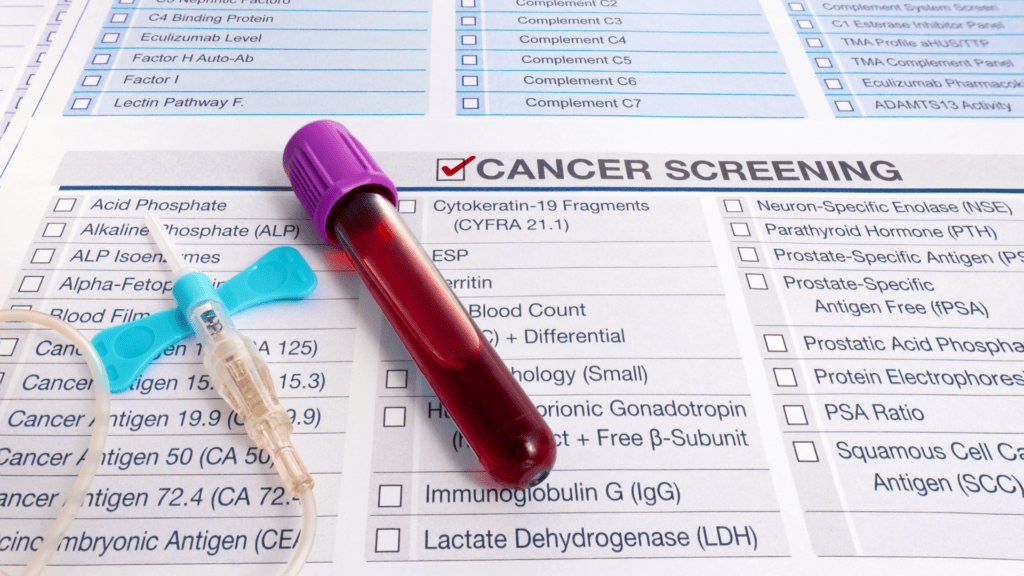
Routine Blood Tests And Tumour Markers
A standard blood panel might reveal anaemia, signs of inflammation, or changes in organ function that prompt a doctor to look further. But these findings are general indicators, not cancer-specific ones.
Tumour markers such as PSA or CA-125 have selected, well-defined uses, but they can also be raised for entirely non-cancer reasons, and they’re not designed as universal screening tools. It’s worth remembering that a normal general blood panel doesn’t rule cancer out; it simply means nothing unusual showed up in that particular set of measurements.
Multi-Cancer Early Detection Blood Tests
Multi-cancer early detection (MCED) tests use a range of different technologies, including circulating tumour cell (CTC) analysis, ctDNA, and methylation-based signals. The appeal is fairly obvious: one blood sample may be able to assess signals associated with multiple solid cancers, including some that don’t currently have a routine population screening programme.
The limitations matter just as much as the potential, though. These tests can produce false positives and false negatives, their performance varies by cancer type and stage, population-level outcomes are still an active area of research, and any positive finding needs confirmatory testing before it means anything definite. TruCheck, for example, is a CTC-based test aimed at eligible asymptomatic adults, but won’t be used as a primary source of information that decides which type of cancer you might get.
MRI And Whole-Body MRI Screening
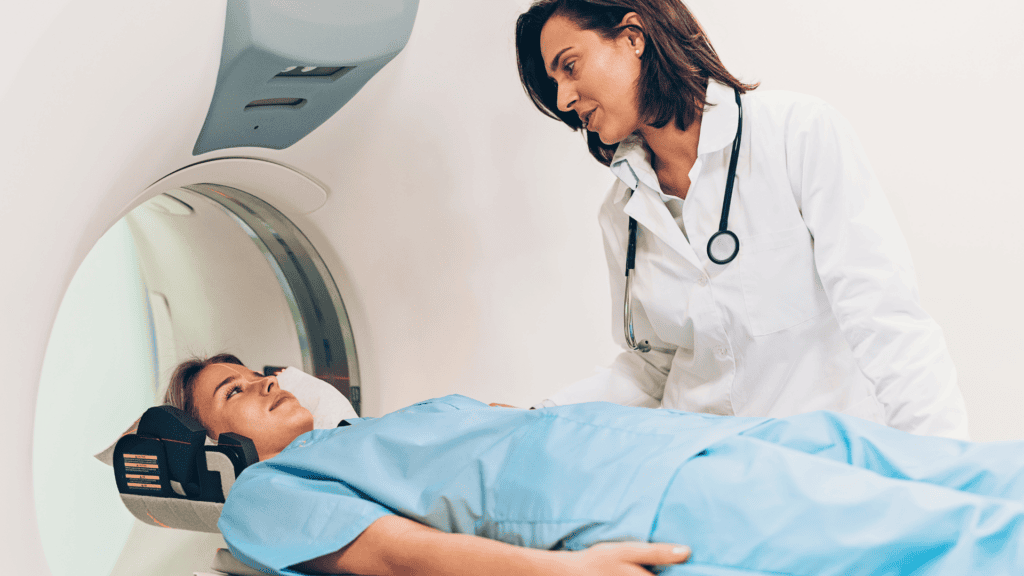
MRI creates highly detailed anatomical images without using ionising radiation, which makes it a valuable tool in many clinical situations. Targeted MRI has an established role in diagnosis and in high-risk screening for selected organs and patient groups.
Elective whole-body MRI, however, isn’t part of routine NHS population cancer screening for average-risk adults. There are real limitations worth knowing about: incidental findings that lead nowhere useful, a false sense of reassurance, further scans or procedures triggered by ambiguous results, protocols that vary between providers, and certain cancers that are genuinely difficult to pick up on MRI.
Body scanning is only recommended to investigate symptoms of disease and only under the direction of a doctor, warning that scanning people without symptoms carries a risk of overdiagnosis and unnecessary treatment that can cause needless anxiety.
Genetic Tests For Inherited Cancer Risk
Genetic testing estimates inherited susceptibility to certain cancers and does not tell you whether cancer is present right now. It is not used as cancer early detection tests, but rather it tends to be most useful for people with a relevant family pattern, a specific ancestry-linked risk, a known familial genetic variant, or a specialist’s recommendation to pursue it.
A positive inherited-risk result can genuinely change things. It might shift the age you’re offered organ-specific screening, how often you’re screened, or which type of surveillance makes sense for you going forward.
Cancer Early Detection Tests Compared
| Test | What it looks for | Best suited to | Advantages | Limitations | What happens after an abnormal result |
| NHS breast, bowel, cervical & targeted lung screening | Cancer-specific changes in defined organs | Adults within the eligible age/risk group for that programme | Evidence-based, free, structured follow-up pathway | Only covers specific cancers; eligibility criteria apply | Referral into an established diagnostic pathway |
| Routine blood tests & selected tumour markers | General organ function, inflammation, selected proteins | Anyone as part of general health monitoring | Widely available, low cost | Not cancer-specific; normal results don’t rule cancer out | Further targeted investigation if abnormal |
| Multi-cancer blood tests (e.g. TruCheck) | Cellular or molecular signals associated with several solid cancers | Asymptomatic adults wanting broader proactive screening | One sample may cover multiple cancer types, including some without routine screening | False positives/negatives possible; variable performance by cancer and stage | Clinician-led standard-of-care imaging and diagnostic tests |
| Targeted or clinically indicated MRI | Anatomical changes in a specific organ or region | People with symptoms, an abnormal finding, or high-risk surveillance need | Detailed imaging; no radiation | Can miss small or modality-specific lesions; incidental findings | Further imaging, biopsy or specialist referral |
| Elective whole-body MRI | Anatomical abnormalities across the body | Generally not recommended for average-risk, asymptomatic adults without doctor referral | Broad anatomical coverage | Higher risk of incidental findings and overdiagnosis; not part of NHS screening | Doctor-led review; may require further scans or procedures |
| Genetic cancer-risk testing | Inherited genetic variants linked to cancer risk | People with relevant family history or known familial variants | Can inform personalised surveillance plans | Doesn’t detect current cancer; requires genetic counselling context | Referral to genetic counselling and tailored surveillance planning |
Cancer Blood Test Vs MRI: What Is The Difference?
At a basic level, blood tests look for biological signals circulating in the blood, while MRI looks for anatomical changes in tissues and organs. They are applied in different clinical settings, answering different questions.
A blood test may suggest that further investigation is warranted before any lesion is even visible on a scan, but it typically can’t precisely locate or confirm cancer on its own. MRI, meanwhile, can visualise many tissues in impressive detail, but it can still miss small, microscopic, or modality-specific cancers, and it can also pick up unrelated abnormalities that have nothing to do with cancer at all.
Rather than competing with each other, these two approaches tend to work best as complementary tools within a clinician-led pathway, not as direct substitutes you pick between.
Which Test Can Find Cancer The Earliest?
This is one of the most common questions, and the answer is it depends on the biology of the specific cancer, which organ is involved, the technology behind the test, how often you’re screened, and your individual risk profile.
Some established screening tests are designed to catch pre-cancerous changes before they become cancer. Some imaging can identify small anatomical lesions long before they’d cause symptoms. No single private test detects every cancer earlier than every scan or every symptom, and it’s worth being sceptical of any claim that suggests otherwise.
What matters more than theoretical detection timing is the actual outcome evidence behind a test, and having an appropriate, clinician-guided follow-up plan for whatever it finds.
Which Screening Approach Fits Different Patient Scenarios?
Instead of looking for a one-size-fit-all solution to navigate potential threats, it’s advisable to choose suitable approaches for different scenarios, one that can actually help you identify the patterns:
| Scenario | Suggested approach |
| Average-risk, asymptomatic adult | Attend established NHS screening; discuss general risk assessment and optional supplemental testing with a doctor |
| Strong family history or known inherited variant | Genetic counselling and risk-specific surveillance |
| Current symptoms | GP or specialist diagnostic pathway, don’t rely on screening tests |
| High smoking-related lung cancer risk | Assess eligibility for targeted lung health checks or the low-dose CT pathway |
| Previous cancer diagnosis | Oncology-led surveillance plan; a general asymptomatic screening test like TruCheck may not be appropriate |
| Asymptomatic Adults | TruCheck screening tests. |
| Positive multi-cancer screening result | Clinician-led targeted imaging and standard-of-care diagnostic testing |
Potential Harms Of Too Much Screening
It’s tempting to think more tests are always safer, but that’s not quite true. Stacking multiple tests without a coordinated plan carries real risks:
- False-positive results that cause unnecessary anxiety while further tests rule things out.
- Incidental findings that lead to repeat imaging, invasive procedures, or treatment of abnormalities that may never have caused any harm.
- False-negative reassurance, where a clear result delays investigation of symptoms that later turn out to matter.
- Financial cost and fragmented care, particularly when tests are booked independently without a doctor coordinating the overall picture.
- Overdiagnosis and overtreatment, treating something that was never going to cause a problem in the first place. This is extremely detrimental to people with anxiety while receiving the results, which could put their nervous system to the edge of harm.
How To Build A Personalised Cancer Screening Plan
A sensible screening plan usually starts with a proper review, rather than picking tests off a menu:
- Review your individual profile: age, sex or anatomy, smoking history, occupational exposures, ethnicity, family history, any known genetic variants, and previous test results.
- Check which NHS programmes and risk-based pathways already apply to you.
- Identify gaps that a supplemental test may actually address.
- Discuss what follow-up would realistically be available before booking any test, especially a private one.
- Document when tests should be repeated, and make sure you know which symptoms would warrant immediate assessment regardless of screening schedules.
Where TruCheck May Fit In A Screening Plan
TruCheck is designed for suitable asymptomatic adults over 40, following a proper consultation to confirm the test is appropriate for that individual. According to current clinic information, it screens for CTC-associated signals across more than 70 solid-organ cancers.
It’s worth being clear about its boundaries: it doesn’t screen for blood cancers, it doesn’t detect every possible cancer, and it doesn’t confirm a diagnosis on its own. It’s designed to sit alongside standard NHS screening and your routine medical care.
Choosing the right cancer screening approach doesn’t have to mean navigating it alone. At our Marylebone clinic, Dr Michael O’Gorman offers personalised consultations to help you understand where TruCheck and other tests fit within your own risk profile, so you can build a screening plan that genuinely makes sense for you.
Our clinic currently lists TruCheck at £1,250, which includes the pre-test consultation, sample collection, laboratory analysis, a written report, and an initial results consultation. It’s worth confirming current pricing directly when you book, as this can be updated.
London Clinic Details
- Address: 19 Wimpole Street, Marylebone, London W1G 8GE
- Opening hours: Monday to Friday, 10 AM to 6 PM
- Booking: To book a TruCheck screening consultation with Dr Michael O’Gorman, make your booking online or whatsapp message on +44 7588 385133.
Frequently Asked Questions
- Is a cancer blood test better than a whole-body MRI? Neither is universally “better” — they look for different things. A blood test may flag a biological signal, while MRI shows anatomical detail; which is more appropriate depends on your individual situation and should be discussed with a doctor.
- Can a whole-body MRI detect every cancer? No. MRI can miss small, microscopic, or modality-specific cancers, and elective whole-body scanning also carries a real risk of incidental findings that lead to unnecessary follow-up.
- Can I have both a multi-cancer blood test and an MRI? Potentially, but this should be part of a coordinated, doctor-led plan rather than booking tests independently, to avoid unnecessary cost, anxiety, or fragmented follow-up.
- Which NHS cancer screening tests should I attend? This depends on your age, sex, and risk profile — breast, bowel, cervical, and targeted lung screening each have their own eligibility criteria, so it’s worth checking which apply to you directly with the NHS.
- What is the difference between genetic risk testing and cancer detection? Genetic testing estimates your inherited susceptibility to certain cancers; it doesn’t tell you whether cancer is present in your body right now. Detection tests, like blood tests or imaging, look for signs of a current disease process.
- What should I do if I have symptoms? See a GP or relevant specialist promptly. Symptoms need a diagnostic pathway, not a screening test, and this applies even if you’ve had a recent negative screening result.
- Does a negative screening test mean I am cancer-free? No. A negative result lowers the likelihood of a detectable, covered cancer at the time of testing, but no screening test can guarantee the complete absence of cancer.