


TruCheck is a blood-based multi-cancer screening test designed to identify signals associated with certain cancers in people who may not have any symptoms. It’s intended for early detection, but it’s important to be clear from the outset: it’s not a diagnostic test, and it cannot guarantee that cancer is absent.
This article explains which cancers TruCheck is designed to screen for, how the test actually works, its potential benefits and limitations, and where it may fit alongside standard cancer screening.
What Is the TruCheck Blood Test?
TruCheck analyses a blood sample for circulating tumour cells (CTCs) and related cell clusters that have detached from a solid tumour and entered the bloodstream. Detecting these cells may indicate a potential cancer signal that needs appropriate clinical follow-up.
It’s designed for asymptomatic adults over 40, and it’s meant to sit alongside established screening rather than replace it: patients should continue attending NHS screening invitations and discuss general risk assessment with their doctor, with TruCheck available as an optional supplemental test where appropriate.
Unlike a test built to investigate one specific cancer or a particular symptom, TruCheck is designed to screen for CTC’s associated with multiple cancers from a single blood sample, which is really the core idea behind multi-cancer detection.
Potential Benefits of the TruCheck Blood Test
One Blood Sample
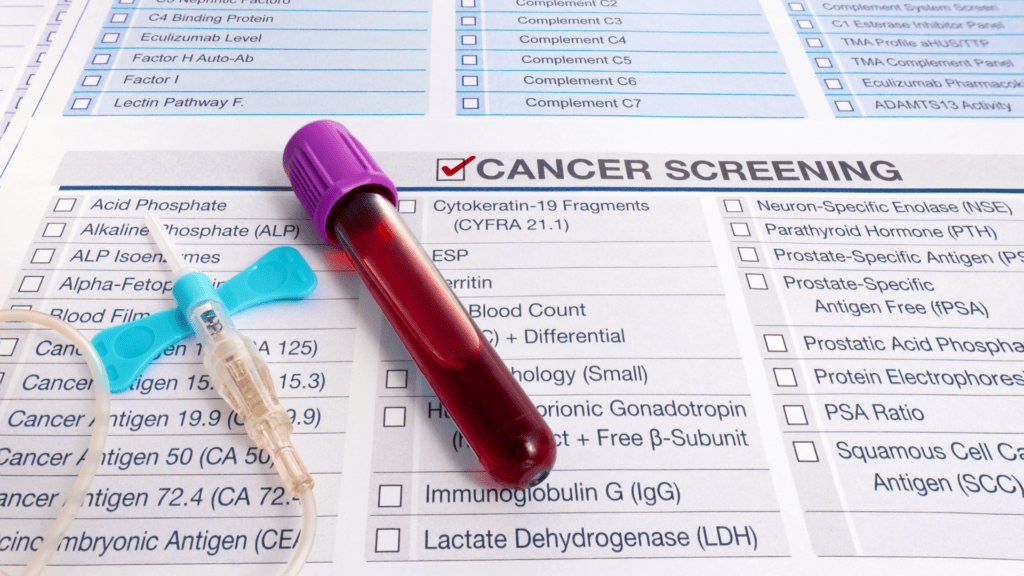
From a single blood sample, TruCheck searches for CTCs that have separated from a solid tumour and entered the bloodstream. That one blood draw can then be used to screen for signals associated with multiple different cancer types at once, rather than needing a separate test for each.
Multiple Cancer Detection
TruCheck is designed to cover more than 70 types of cancer, screening for signals associated with a broad range of solid-organ cancers rather than focusing on just one. This breadth is the main distinction between blood-based cancer screening like TruCheck and a single-cancer test such as a PSA or mammogram.
May Support Earlier Investigation
As a screening test, TruCheck acts as an additional source of information for early cancer screening. In practical terms, this means it may help flag a potential concern sooner, which can then lead to further diagnostic investigation. It’s important to know that the test itself doesn’t confirm anything on its own: it should only be used as a screening tool for early cancer management and detection, not an absolute source of information.
Who May Be Suitable for TruCheck?
Just like other screening tests, TruCheck is not a screening tool applied for every patient. Instead, there are strict protocols of who is suitable for the TruCheck early screening test.
Potentially Suitable If You Are:
- Asymptomatic adults over 40 years old. This means prior to the TruCheck test, you don’t have any symptoms that could indicate an existing cancer, including general symptoms nor area-specific signals.
- Interested in proactive health monitoring, or patients who are looking to incorporate cancer screening for asymptomatic adults into an annual wellness check.
You May Need a Different Approach If:
- You currently have symptoms that you think can be early signals of cancer. TruCheck isn’t designed for investigating an active concern
- You have a history of cancer. Surveillance after a diagnosis needs a different, oncology-led approach
- You’re under 40. As bodies grow older, the cancer incidence rate increases, so TruCheck isn’t recommended for this age group for ensured accuracy.
- You’re pregnant. Biological changes during pregnancy might interfere with the result; speak to your obstetrician about a more suitable test if you have concerns about cancers.
- Another screening or diagnostic approach is simply more appropriate for your situation. If you have symptoms of cancer and you are under 35-40, it is necessary to have a closer look at other specific screening tests.
What Cancers Can the TruCheck Blood Test Detect?
TruCheck is designed to identify cancer signals associated with more than 70 types of solid-organ cancer from a single blood sample. That said, it doesn’t detect every cancer, and any signal it picks up needs further investigation rather than standing in as a diagnosis.
| Category | Common examples |
| Breast and reproductive | Breast, ovarian, uterine, cervical, prostate, testicular |
| Digestive | Colorectal, stomach, pancreatic, oesophageal, liver |
| Respiratory | Lung cancer |
| Urinary | Kidney, bladder |
| Endocrine and other solid-organ cancers | Thyroid, and other solid tumours affecting glandular or organ tissue |
It’s worth stressing that this table reflects broad categories of common types of solid-organ cancers, and coverage should always be confirmed directly with the clinic for the most current information.
What Happens During a TruCheck Blood Test?
Designed as a screening test, TruCheck is not a one-size-fit-all tool that can be suitable for every patient requiring it. The standard process runs through four clear stages, from initial consultation to your post-consultation if there is any information worth noticing or investigating further.
| Stage | What happens |
| Pre-test consultation | Your medical history, family history, current health, and any relevant risk factors are reviewed to confirm the test is appropriate for you |
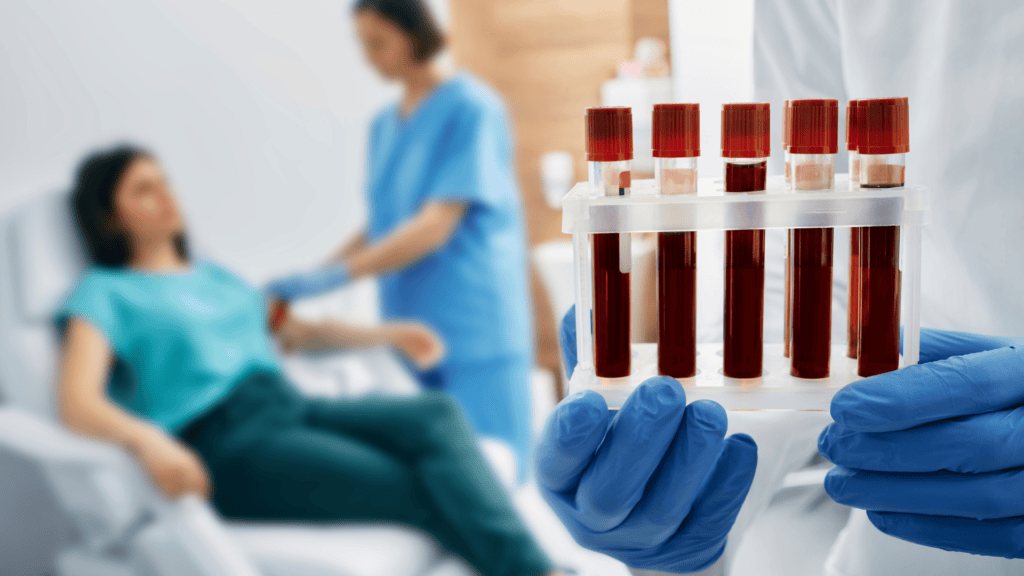
| Blood sample collection | A standard blood draw is taken and securely transported to the laboratory |
| Laboratory analysis | The sample is processed to enrich for rare circulating tumour cells, which are then identified using immunocytochemistry and examined under fluorescence microscopy |
| Results consultation | Your doctor talks you through the result, what it means, and any recommended next steps |
What Are the Limitations of TruCheck?
It Does Not Diagnose Cancer
TruCheck is a screening test, not a diagnostic one. A result indicating a potential cancer signal doesn’t confirm that cancer is present. This could sometimes be called false positive; it typically requires further diagnostic investigation before anything is certain either way.
Not Every Cancer Will Necessarily Be Detected
TruCheck is specifically designed to target circulating tumour cells shed from solid tumours in organs and tissues. Blood cancers, such as leukaemia, lymphoma, and myeloma, aren’t included in this solid-tumour screening scope, since they don’t shed cells into the bloodstream in the same way.
False-Positive and False-Negative Results Are Possible
No test is perfect, and TruCheck is no exception. False positives and false negatives can both occur, which is exactly why follow-up diagnostic tests are often necessary, both to confirm a genuine result and to rule out a false positive before drawing any conclusions.
It Does Not Replace Standard Screening
Multi-cancer tests like TruCheck aren’t designed to replace traditional cancer screening programmes. Instead, they’re intended to complement existing screening methods, filling in some of the gaps rather than substituting for what’s already proven to work.
What Happens After a Positive TruCheck Test?
A positive result sets off a fairly structured process, rather than an immediate diagnosis:
- A post-result consultation, where your doctor explains the likely origin of the signal (where this can be determined) and talks through the genuine uncertainty involved.
- Risk-led standard-of-care imaging or specialist tests, chosen based on your specific result.
- A biopsy or other confirmatory procedure, if a suspicious lesion is actually identified on imaging.
- A documented follow-up plan, in case initial investigations don’t identify a cancer straight away.
- Clear safety-netting advice, meaning you’re told to report any new symptoms immediately, rather than simply waiting for your next scheduled screening.
How Often Should You Do a TruCheck Screening Test?
How often you have a TruCheck test should follow the provider’s current clinical recommendation and your own individual circumstances, rather than a broad rule that everyone repeats it annually regardless of risk profile or previous results. This is a conversation worth having directly during your TruCheck consultation, where your doctor can advise on a sensible interval based on your age, risk factors, and health history.
Actively Manage Your Health With TruCheck at Dr.Michael O’Gorman
At the Dr. Michael O’ Gorman clinic, TruCheck is incorporated in a holistic healthcare approach, applied for asymptomatic adults who would like to have a preliminary checkup. Here, TruCheck works as a screening tool to signal any early sign that can be found from one single blood draw, and each patient will have a consultation with Dr. Michael O’ Gorman after the result comes back, ensuring personalised approaches are provided if needed.
London Clinic Details
- Address: 19 Wimpole Street, Marylebone, London W1G 8GE
- Opening hours: Monday to Friday, 10 AM to 6 PM
- Booking: To book a TruCheck screening consultation with Dr Michael O’Gorman, have your booking online or message on whatsapp at +44 7588 385133.
Frequently Asked Questions
- Is TruCheck a diagnostic cancer test?
No. TruCheck is a screening test designed to detect a potential cancer signal, not to confirm a diagnosis. Any positive or indeterminate result needs further diagnostic investigation before a diagnosis can be made.
- What happens if TruCheck detects a cancer signal?
You’ll have a post-result consultation to discuss the finding, followed by targeted standard-of-care imaging or specialist tests, and specialist referral for a biopsy if a suspicious lesion is identified – the exact pathway depends on your individual result.
- How often should I have TruCheck?
This depends on your personal circumstances and the clinic’s current clinical guidance, rather than a fixed annual rule, it’s best discussed directly with your doctor.