


LED light therapy and microneedling address different skin concerns through different mechanisms, and neither is universally better than the other. The right choice depends on skin condition, treatment goals, barrier health, downtime tolerance, and a clinical assessment of what the skin actually needs – not the treatment that is most popular or most widely discussed.
In London, many patients compare these two treatments when looking for smoother, clearer, or healthier-looking skin. This guide explains how each treatment works, which concerns each is better suited for, and when a staged plan using both may be appropriate.
What Is LED Light Therapy?
A Non-Invasive Light-Based Treatment
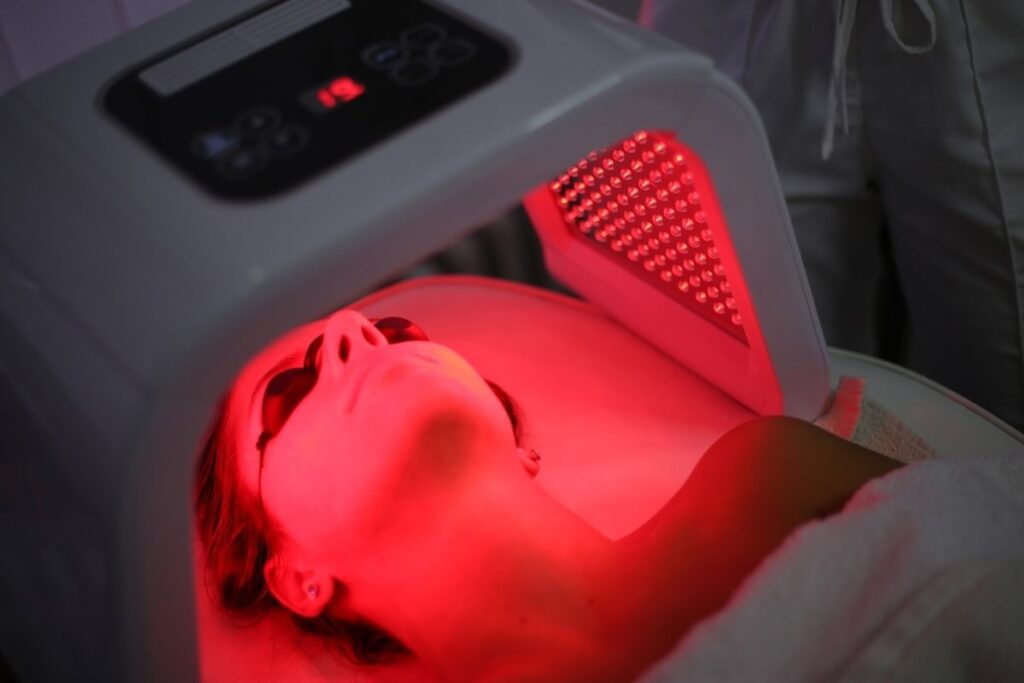
LED light therapy uses selected wavelengths of light to support cellular activity in the skin. Red and near-infrared LED are used for photobiomodulation, where light energy interacts with cellular pathways involved in repair, inflammatory response, visible calmness, and recovery.
LED does not involve needles, resurfacing, or controlled skin injury. This makes it a lower-intensity option for patients seeking gradual skin support rather than a more active remodelling treatment.
In medical aesthetics, LED is commonly used for skin comfort, post-treatment recovery, dull-looking skin, visible calmness, and long-term maintenance. It is not designed to create dramatic structural change, but it can form a useful part of a considered skin health plan.
Smartlux Red And Near-Infrared LED Therapy
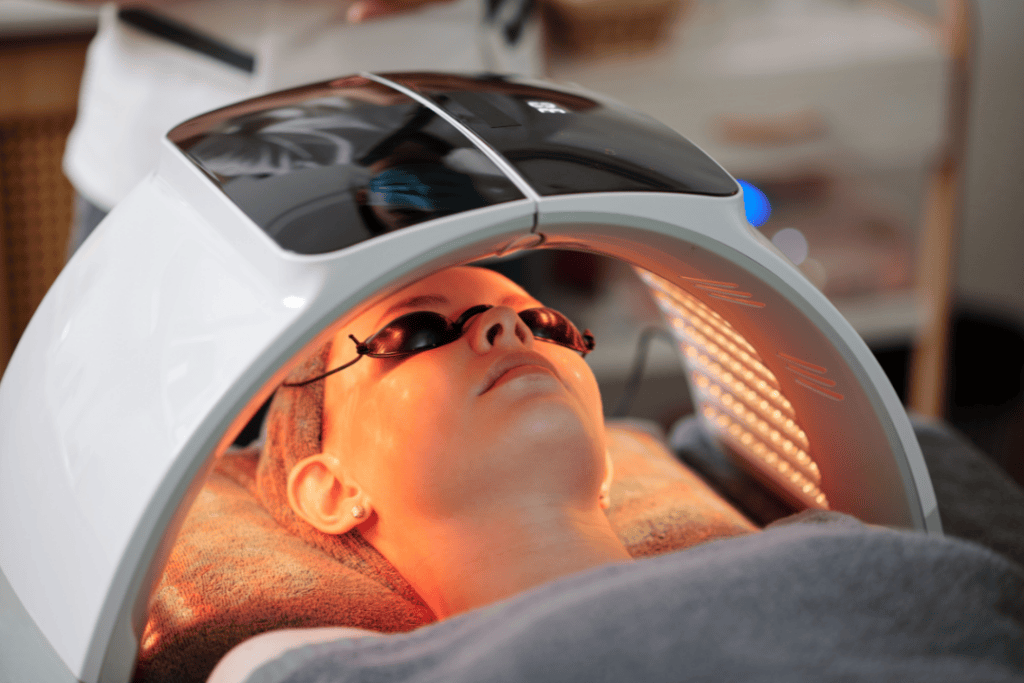
Smartlux is the medical-grade red and near-infrared LED device used at Dr Michael O’Gorman’s Marylebone clinic. It operates across red and near-infrared wavelengths clinically associated with photobiomodulation, delivering consistent, calibrated light energy in a controlled clinical environment.
This matters because consumer and at-home LED devices vary significantly in light output, wavelength accuracy, and irradiance levels. A clinical device like Smartlux delivers predictable energy at the correct depth, which is why results from professional treatment are typically more consistent than those from at-home devices used without clinical guidance.
Smartlux can be used as a standalone treatment or as an add-on with selected treatments when clinically appropriate – including after skin peels, microneedling, IPL, or RF treatments to support post-procedure comfort and recovery. Suitability should always be assessed during consultation, particularly for patients with photosensitivity, active skin conditions, or recent procedures.
What Is Microneedling?
Microneedling – also referred to as skin needling or collagen induction therapy – is a minimally invasive treatment that uses fine needles to create controlled microchannels in the skin.
These microchannels stimulate wound-healing pathways and collagen remodelling. This makes microneedling more active than LED light therapy and more focused on texture, scarring, pores, and collagen-related skin changes.
Microneedling is commonly used for atrophic acne scars, enlarged pores, uneven texture, fine lines, and selected scars. Because it creates controlled skin injury, treatment depth, skin type, active inflammation, barrier health, and aftercare all need to be assessed carefully before treatment.
Note on microneedling types: This article refers to standard microneedling (collagen induction therapy). RF microneedling – which combines needle channels with radiofrequency energy – is a separate treatment with a different mechanism, deeper tissue effect, and distinct suitability criteria. If you are researching RF microneedling specifically, a separate consultation is recommended.
LED Light Therapy Vs Microneedling: Key Differences
| Factor | LED Light Therapy | Microneedling |
| Treatment Type | Non-invasive light-based therapy | Minimally invasive collagen induction treatment |
| How It Works | Uses selected wavelengths to support cellular activity via photobiomodulation | Creates controlled microchannels to stimulate wound-healing and collagen remodelling |
| Skin Impact | Supports the skin without controlled injury | Creates controlled micro-injury to trigger dermal remodelling |
| Needle Depth | No needles | Typically 0.5mm–2.5mm depending on concern and skin area |
| Downtime | Usually minimal | Redness, sensitivity, dryness, or peeling for 24–72 hours |
| Treatment Comfort | Generally comfortable; gentle warmth | Can feel prickly; topical numbing typically applied |
| Result Timeline | Gradual skin support across a course | Gradual but active remodelling; assessed at 4–6 weeks post-treatment |
| Clinical Role | Supportive treatment, recovery add-on, or maintenance | Active texture, scarring, and collagen treatment |
The main difference is intensity and mechanism. LED light therapy is photobiomodulatory and recovery-focused, while microneedling creates a controlled physical stimulus for dermal remodelling. Neither treatment is universally better – the more appropriate choice depends on what the skin needs and how much downtime the patient can accept.
Not sure which treatment is right for your skin? A consultation with Dr O’Gorman can help clarify which option – or which combination – suits your skin condition and goals. Book a consultation at the Marylebone clinic.
Which Treatment Is Better For Each Skin Concern?
| Skin Concern | More Suitable | Why |
| Atrophic Acne Scars | Microneedling | Stimulates dermal remodelling through controlled microchannels, making it more clinically relevant for depressed acne scarring. Active acne should be stabilised before treatment. |
| Enlarged Pores And Uneven Texture | Microneedling | Provides a more active stimulus for textural refinement and surface irregularity when the concern is structural rather than inflammatory. |
| Redness And Reactive Skin | LED Light Therapy | Lower intensity and no controlled skin injury, making it more appropriate when the priority is visible calmness and skin comfort. |
| Rosacea-Prone Skin | LED Light Therapy, With Assessment | Can support a calmer-looking complexion in selected patients, but rosacea requires clinical assessment and is typically part of a broader plan. |
| Early Fine Lines | LED Light Therapy | Appropriate for early fine lines and skin dullness when the goal is gradual enhancement without downtime or controlled injury. |
| Moderate Fine Lines With Texture Changes | Microneedling | When fine lines are accompanied by texture irregularity or early scarring, microneedling offers a more active collagen-induction stimulus. |
| Dull-Looking Skin | Both, Depending On Goals | LED supports gradual skin quality with minimal downtime. Microneedling is more appropriate when dullness is linked to texture or post-acne changes. |
| Post-Treatment Recovery | LED Light Therapy | LED is used as a supportive recovery treatment. Microneedling creates controlled micro-injury and is not appropriate as a recovery treatment. |
| Sensitive Or Reactive Skin | LED Light Therapy, With Assessment | Usually the lower-intensity option. Microneedling requires careful assessment of barrier function and skin reactivity. |
The best choice should be based on skin condition, barrier health, downtime tolerance, and consultation-led clinical assessment.
Can LED Light Therapy And Microneedling Be Combined?
LED light therapy and microneedling can be combined in selected patients when clinically appropriate. In practice, microneedling provides the active collagen-induction stimulus, while Smartlux LED is sometimes applied afterwards to support skin comfort, visible calmness, and post-treatment recovery.
At Dr O’Gorman’s clinic, LED is available as an add-on to microneedling and other skin treatments when the skin response and treatment depth make it appropriate. Timing is important – the decision to apply LED after microneedling should depend on treatment depth, skin sensitivity, and aftercare needs, not as a routine step for every patient.
A consultation helps determine whether the skin is better suited to LED alone, microneedling alone, or a staged treatment plan that includes both at different points.

LED Light Therapy And Microneedling Cost In London
LED Light Therapy (Smartlux) – Published Pricing at Dr O’Gorman’s Marylebone Clinic
| Session Type | Price |
| Single session (standalone) | £75 |
| Course of 6 sessions | £450 |
| Add-on to another treatment | £50 |
A course of 6 sessions is recommended for ongoing skin quality improvement, spaced one to two weeks apart. Single sessions are appropriate when the aim is short-term skin comfort, post-procedure support, or a gentle boost before an event.
Microneedling (Skin Needling) – London Market Context
Standard microneedling in London typically ranges from £150 to £350 per session at medical aesthetic clinics, depending on treatment area, needle depth, device used, and practitioner experience. Packages of 3 to 4 sessions are commonly recommended for concerns such as acne scarring, enlarged pores, or uneven texture, as collagen remodelling develops cumulatively.
Pricing for microneedling at Dr O’Gorman’s clinic is confirmed during consultation, as the appropriate session plan depends on skin assessment, treatment area, and clinical suitability. An initial consultation is recommended before booking.
Safety, Downtime And Suitability
LED light therapy is generally lower intensity than microneedling, but suitability still requires clinical screening. Patients with photosensitivity, certain medications including photosensitising antibiotics or retinoids, active skin conditions, pregnancy, recent procedures, or ongoing dermatological care should be assessed before treatment.
Microneedling creates controlled micro-injury and therefore requires appropriate technique, hygiene, treatment depth selection, and aftercare. Temporary erythema, sensitivity, dryness, peeling, swelling, or pinpoint bleeding may occur after treatment and typically resolve within 24–72 hours. Microneedling may need to be delayed or avoided in patients with active infection, inflamed acne, impaired barrier function, keloid tendency, significant skin reactivity, or relevant medication history.
A consultation helps determine whether LED light therapy, microneedling, or a staged treatment plan is most appropriate. Treatment should only proceed when the skin is stable, contraindications have been reviewed, and the patient understands the expected downtime, recovery process, and likely outcome range.
LED Light Therapy Or Microneedling: Which Should You Choose?
LED light therapy is usually more appropriate when the skin needs lower-intensity support, visible calmness, recovery, or maintenance. It does not create controlled injury, making it a more conservative option for patients with reactive skin, limited downtime, or early skin quality concerns such as dullness or early fine lines.
Microneedling is usually more appropriate when the treatment goal is dermal remodelling, atrophic acne scar improvement, enlarged pore refinement, uneven texture, or collagen induction. Because it creates controlled micro-injury, treatment depth, skin barrier function, inflammation, and aftercare need to be assessed carefully.
Some patients benefit from both treatments at different stages of a personalised plan. The right choice should be guided by skin diagnosis, barrier health, medical history, downtime tolerance, contraindications, and realistic expectations.
Still unsure which treatment suits your skin? Book a consultation with Dr O’Gorman at 19 Wimpole Street, Marylebone. A clinical assessment takes the guesswork out of treatment planning.
Why Choose A Medical-Led Skin Clinic In London?
A medical-led skin clinic in London assesses whether LED light therapy or microneedling is appropriate based on skin diagnosis, barrier function, inflammation, medical history, and treatment goals. This matters because LED works through photobiomodulation at the cellular level, while microneedling creates controlled micro-injury to stimulate dermal remodelling – these are fundamentally different interventions that suit different skin profiles.
Dr Michael O’Gorman’s approach focuses on safety, informed consent, natural-looking outcomes, and long-term skin health. Treatment planning considers skin quality, active skin conditions, previous procedures, medication history, downtime tolerance, and suitability for either treatment – including whether a combination or staged approach makes the most clinical sense.
At the Marylebone clinic, patients can discuss LED light therapy, microneedling, or a personalised skin plan that draws on a wider range of treatments including skin peels, IPL photofacial, RF skin resurfacing, and regenerative facials, depending on clinical assessment. The aim is to match treatment to the patient’s skin biology and risk profile, not to recommend the most intensive option.
Frequently Asked Questions
Is LED light therapy better than microneedling?
Neither treatment is universally better. LED is more appropriate for gentle skin support, recovery, redness-prone skin, and early fine lines. Microneedling is more appropriate for atrophic acne scars, uneven texture, enlarged pores, and active collagen remodelling. The right choice depends on clinical assessment.
Can I have LED after microneedling?
LED can be used after microneedling when clinically appropriate. At Dr O’Gorman’s clinic, Smartlux LED is available as an add-on to microneedling when the skin response and treatment depth make it suitable. Timing should depend on treatment depth, skin sensitivity, and practitioner guidance.
Is microneedling better for acne scars?
Standard microneedling is usually more clinically relevant for atrophic (depressed) acne scars because it stimulates dermal remodelling through controlled microchannels. Active acne should be assessed and stabilised before microneedling is recommended.
Which treatment has less downtime?
LED usually has minimal downtime. Microneedling commonly involves temporary redness, sensitivity, dryness, or peeling for 24–72 hours after treatment, depending on depth and individual skin response.
Is LED or microneedling better for sensitive skin?
LED is often the more appropriate option for sensitive or reactive skin, as it does not create controlled skin injury. Microneedling requires careful assessment of barrier function and skin reactivity before it can be considered in sensitive skin types.
Can LED and microneedling be combined in the same session?
In selected patients, Smartlux LED can be applied after microneedling as a recovery support treatment. Whether this is appropriate depends on treatment depth, skin condition, and the clinical assessment at the time of treatment. It is not a routine add-on for every patient.
How much does LED light therapy cost in London?
At Dr O’Gorman’s Marylebone clinic, a single Smartlux LED session costs £75, a course of 6 sessions costs £450, and LED as an add-on to another treatment costs £50. London market pricing for LED at other medical clinics varies by device, session length, and provider.
London Clinic Details
Address: 19 Wimpole Street, Marylebone, London W1G 8GE
Opening hours: Monday to Friday, 9 AM to 6 PM
Booking: Consultations and quotes are available upon request. Visit the clinic website or call +447588385133 to schedule your LED light therapy or microneedling consultation in London.