

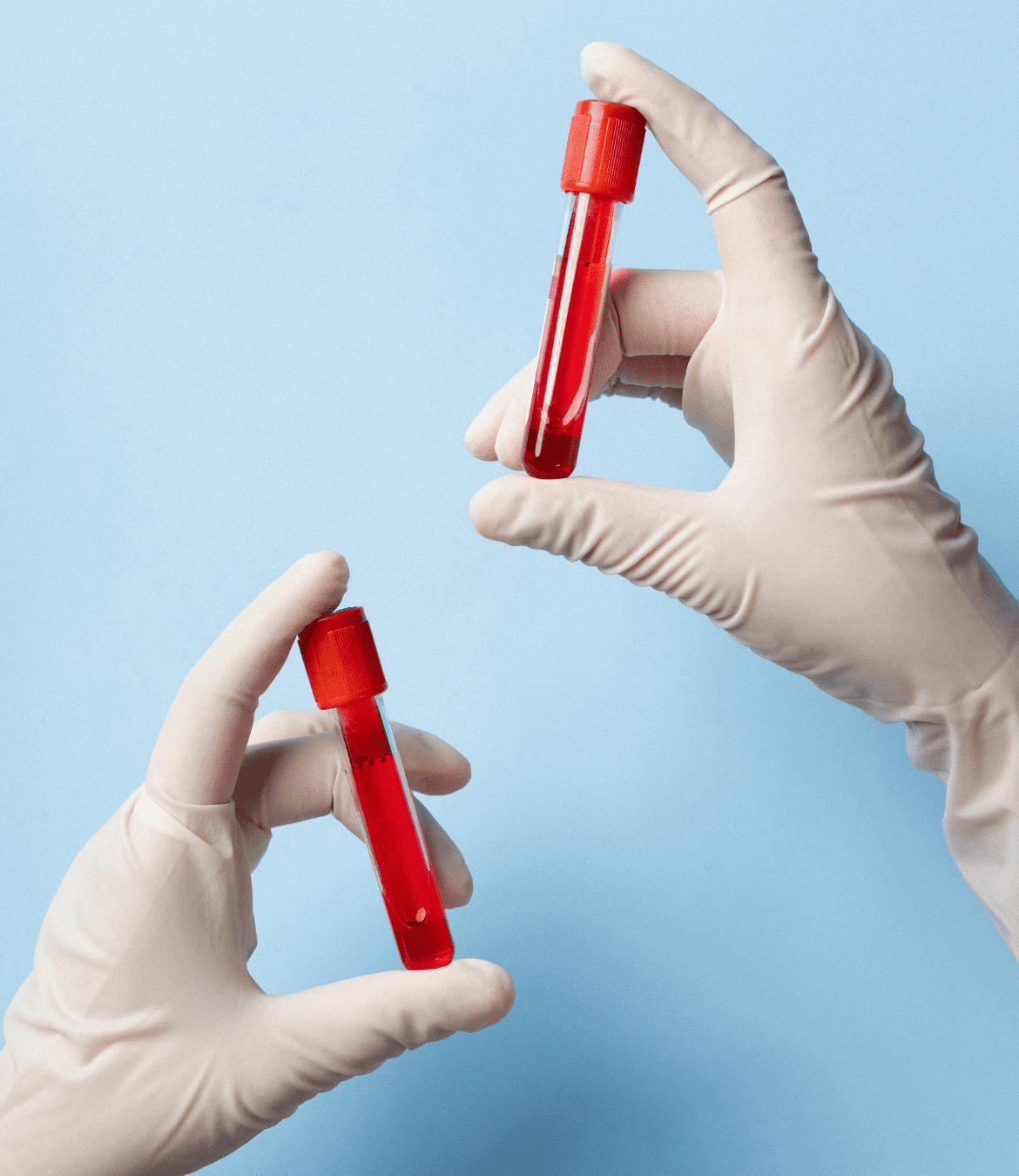
If you wonder can a blood test detect cancer, the answer is yes. In modern healthcare, detecting cancer at an early stage can prevent the tumour from growing uncontrollably, and modern clinicians often use blood tests to help identify these early cancer signals before it comes to progression. Blood tests have used as one of the cancer early detection tests, which can identify abnormalities, biomarkers, tumour cells, or other cancer-related signals, but no routine blood test can diagnose every type of cancer.
It’s important to understand what a cancer screening blood test can and cannot do. This guide will provide information on the application and limitation of the cancer blood test and different types of tests that are used in modern medical clinics.
Can Blood Tests Detect Cancer?
Certain blood tests can flag a possible cancer signal or assess inherited risk, but confirming an actual cancer diagnosis always requires deeper analysis including imaging, a biopsy, or histopathology. Instead of treating blood tests as one reliable source, it should be a starting point for cancer screening, which can provide valuable information about symptoms before it develops further.
It’s worth separating three very different things that people often lump together:
-
- Detecting a possible signal: some tests look for markers, cells, or genetic fragments associated with cancer.
- Assessing inherited risk: genetic tests can show a predisposition to certain cancers, without indicating whether cancer is present now.
- Confirming a diagnosis: this still relies on imaging, tissue sampling, and specialist review.
It’s important to notice that screening tests are designed for people without symptoms who want to be proactive about their health, not as a way to investigate something that’s already concerning you. If you have new or persistent symptoms that have bothered you, the right route is a GP or specialist pathway, not a private screening blood test.
Routine Blood Tests And What They Can Show
A standard blood panel which consists of a full blood count, liver function tests, kidney function tests, and inflammatory markers, can sometimes reveal abnormalities that prompt a doctor to investigate further. An unusual white cell count, for example, might lead to additional questions, and abnormal liver enzymes might trigger imaging.
However, these results are not specific to cancer. They can be affected by infections, medications, lifestyle factors, and a wide range of other conditions. Just as importantly, a normal set of routine bloods does not rule cancer out. Many cancers, particularly in their early stages, produce no detectable change in these standard markers. It’s a common misconception that an annual blood panel amounts to a comprehensive cancer check, while in fact it should only provide preliminary information. Just like regular blood tests, consultation with clinicians and further tests is a must to confirm whether you have cancer or not.

Tumour Marker Blood Test: What It Can and Can’t Confirm
Another type of cancer-related blood test is tumour-marker testing. A tumour marker blood test looks at substances such as PSA (prostate-specific antigen) or CA-125, which are used in monitoring a known prostate or ovarian cancer, or investigating a patient with relevant symptoms.
One of the key limitations of tumour markers is that they can be raised by non-cancerous conditions too. PSA, for instance, can rise due to an enlarged prostate or an unexpected infection, not just prostate cancer. This is why these markers are usually interpreted alongside existing symptoms, physical examination, imaging, and other test results, rather than in isolation.
It also helps to understand the three different roles a tumour marker might play:
-
- Screening: looking for early signs in someone without a diagnosis.
- Diagnosis: supporting and detecting (not confirming) a suspected cancer alongside other findings.
- Monitoring: tracking a known cancer’s response to treatment or watching for recurrence.
Liquid Biopsy And Multi-Cancer Early Detection Tests
A liquid biopsy is a blood-based test that looks for cancer-related material circulating in the bloodstream, rather than sampling tissue directly. Depending on the technology, this might include circulating tumour cells (CTCs), circulating tumour DNA (ctDNA), methylation patterns, or other biological signals shed by tumours.
Multi-cancer early detection (MCED) tests, which are sometimes described as an early cancer detection blood test, take this a step further, aiming to screen for signals associated with several different cancers from a single blood draw. This is an appealing concept, but it’s important to know that these tests are not interchangeable as the underlying technology, the range of cancers covered, and the strength of the supporting evidence all vary significantly from one test to another.
One example available through consultation at our Marylebone clinic is TruCheck, a CTC-based multi-cancer screening test designed to look for circulating tumour cells in the blood.
How The TruCheck Blood Test Works
Designed for adults over 40 who are keen on early cancer screening, TruCheck analyses a peripheral blood sample for circulating tumour cells. Where relevant cells are identified, immunocytochemistry techniques may be used to help suggest the type of malignancy and its likely tissue or organ of origin.
While TruCheck is an advanced technique provided at the clinic, it’s important to have a thorough understanding of the test before screening and further diagnosis:
-
- It is designed to screen for solid-organ cancers. It is not designed for blood cancers such as leukaemia or lymphoma.
- It is intended for asymptomatic adults over 40, following a medical suitability assessment to confirm the test is appropriate for that individual.
- It is a screening test, not a diagnostic test, and it is not a substitute for established population screening programmes such as those for breast, bowel, or cervical cancer.
If you’re considering TruCheck, the pre-test consultation is where these points are discussed in detail, so you understand exactly what the test is assessing before you go ahead.
What Different Cancer Blood Tests Can And Cannot Tell You
With several types of cancer-related blood tests now available, it helps to see how they compare side by side.
| Test type | What it can tell you | Key limitation |
| Routine blood tests | May identify general abnormalities (e.g. inflammation, organ function changes) | Not specific enough to locate or diagnose a particular cancer |
| Tumour markers | Assess selected markers in defined clinical contexts | Limited specificity; not suitable as universal screening |
| Genetic tests | Estimate inherited susceptibility to certain cancers that can be passed down through genetics analysis. | Do not indicate whether cancer is currently present |
| Multi-cancer blood tests | Look for a cancer-associated signal across several cancer types | A positive result requires diagnostic confirmation before any conclusion can be drawn |
No single test type replaces the others. Each test is designed to answer a different question, and understanding which question you’re actually asking is essential before choosing a test.
How Accurate Are Multi-Cancer Blood Tests?
Multi-cancer blood tests show a significant high rate of accuracy. However, this is not a one-size-fit-all solution, as accuracy can vary across different types of cancers.
-
- Sensitivity: how well the test picks up cancer when it’s actually there. A more sensitive test misses fewer true cases.
- Specificity: how well the test correctly identifies people who don’t have cancer. A more specific test produces fewer false alarms.
- False positives: the test suggests a signal, but no cancer is actually present.
- False negatives: the test misses a cancer that is genuinely there.
Test performance is not a single fixed number. It can vary considerably depending on the type of cancer being screened for, the stage at which it’s caught, and the characteristics of the population being tested. A sensitivity figure quoted for one cancer type at a later stage cannot be assumed to apply equally to an earlier-stage or less common cancer.
This connects to a concept called positive predictive value, a statistic in which a person’s positive test result actually contains cancer. In a healthy, asymptomatic population where cancer is relatively uncommon, even a highly accurate test will generate a noticeable proportion of false positives, simply because there are so few true cases in that population to begin with. This is a mathematical reality of screening low-prevalence conditions, not a flaw unique to any one test, but it’s an important factor in interpreting results sensibly.
When A Cancer Blood Test May Be Appropriate
Not everyone is suitable for a cancer blood test. Due to its specific usage, multi-cancer screening tends to suit a distinctive set of circumstances:
-
- Asymptomatic adults who want to take a proactive approach to their health, having first understood the benefits, limitations, and potential follow-up implications.
- Adults over 40 who want to add multi-cancer screening alongside age-appropriate NHS screening programmes.
- People with a family history of cancer, who have discussed with a doctor whether genetic counselling, organ-specific enhanced screening, or a multi-cancer test is the most relevant option for their situation.
- Patients who are ready and willing to pursue further investigation if a result comes back positive or indeterminate.

When You Should Not Rely On A Cancer Blood Test
As stated earlier, early cancer detection via blood test could be used as a complementary test to identify early symptoms, but it should only be used as a general health check-up. Equally, there are situations where a screening blood test is not the right tool:
-
- If you have new or persistent symptoms, unexplained changes, a suspicious finding on examination, or abnormal imaging, these need to be investigated through a proper diagnostic pathway, not a screening test.
- If you have a current or previous cancer diagnosis, you’re likely to need surveillance or specialist oncology testing tailored to your case, rather than a general asymptomatic screening test.
- A negative result should never be used as a reason to dismiss symptoms or to skip recommended screening for breast, bowel, cervical, lung, or other cancers.
What Happens After A Positive Blood Test Result?
A positive result on a screening test indicates a higher likelihood, or the presence of a signal. From there, the typical pathway involves:
-
- Doctor review of the result in the context of your medical history and any symptoms.
- Targeted imaging and organ-specific tests, guided by the type of signal detected.
- Biopsy, where clinically indicated, to confirm or rule out cancer at the tissue level.
Where a test has suggested a likely tissue or organ of origin, this information can help direct the standard-of-care work-up towards the most relevant investigations first.
It’s also worth being aware that initial imaging doesn’t always identify a tumour immediately, even after a positive screening signal. In these cases, a period of monitored follow-up may be discussed with your doctor, rather than an immediate conclusion either way.
Does A Multi-Cancer Blood Test Replace NHS Cancer Screening?
No. Multi-cancer blood testing is best understood as a supplementary option, not an essential test that can replace further investigation. Established NHS screening programmes, on the other hand, are built around specific cancers, targeting defined age or risk groups, and are backed by their own dedicated evidence base and pathways developed over many years.
The most sensible approach is to keep responding to NHS screening invitations as they arrive, and to discuss your individual risk profile and screening options with a doctor.
What To Expect From TruCheck Screening In Marylebone
At our Marylebone clinic, TruCheck is used as a screening consultation to proactively monitor your health. Designed as a screening tool, TruCheck is structured as follows:
-
- Pre-test consultation: You will have a consultation with Dr Michael O’Gorman, covering your medical history, family history, current symptoms (if any), relevant risk factors, and informed consent.
- Blood sample collection followed by secure transport to the laboratory for analysis.
- CTC analysis: the laboratory examines the sample for circulating tumour cells.
- Results consultation: typically around three weeks after your sample is taken, subject to laboratory turnaround times.
The published price for TruCheck screening is £1,250, which includes the pre-test consultation, blood collection, laboratory transport, CTC analysis, a written report, and an initial post-result consultation.
London Clinic Details
Address: 19 Wimpole Street, Marylebone, London W1G 8GE
Opening hours: Monday to Friday, 10 AM to 6 PM
Booking: To book a TruCheck screening consultation with Dr Michael O’Gorman, send a message to Whatsapp at +44 7588 385133.
Frequently Asked Questions
-
- Can a full blood count detect cancer? A full blood count can sometimes show abnormalities that prompt further investigation, but it is not specific enough to diagnose most cancers, and normal results do not rule cancer out.
- Can a blood test detect cancer before symptoms? Some screening tests, including multi-cancer tests, are designed for use in people without symptoms, but no test guarantees detection of every cancer at every stage.
- Which cancers can TruCheck screen for? TruCheck is designed to screen for up to 70 solid-organ cancers. However, it does not screen for blood cancers such as leukaemia or lymphoma.
- Can a cancer blood test miss cancer? Yes. All screening tests have a false-negative rate, meaning some cancers may not be detected, and a negative result cannot be treated as a guarantee.
- What happens if a cancer blood test is positive? A positive result leads to doctor review, targeted imaging, and further tests such as a biopsy where indicated. It only works as a screening process, not confirming a diagnosis on its own.
- Should I still attend NHS screening after a negative result? Yes. A negative screening result should never replace or delay participation in recommended NHS screening programmes.